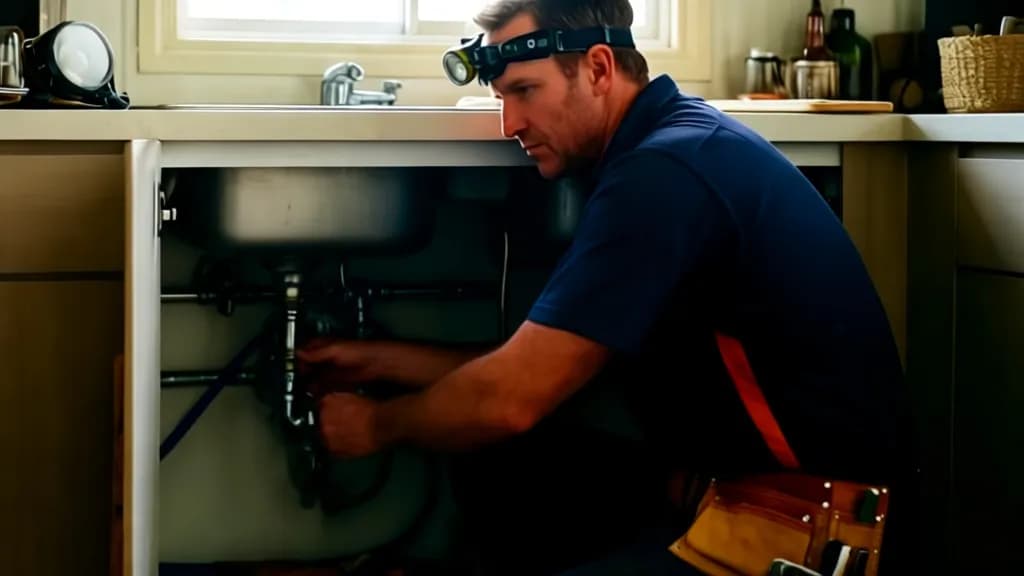
Electrician (Special Class) Visa Pathway to Australia: Complete 2026 Guide
Updated: 13 May 2026
Australia classifies Electrician (Special Class) under ANZSCO 341112. Trades Recognition Australia (TRA) conducts the skills assessment, and OSAP is mandatory for offshore applicants because this is a licensed electrical occupation. The role sits on the MLTSSL and CSOL, unlocking subclasses 189, 190, 491, 482 and 186. Typical 2026 salaries range AUD $110,000-$180,000.
Quick Facts: Electrician (Special Class) Migration Pathway
| Detail | Information |
|---|---|
| ANZSCO Code | 341112 (Electrician (Special Class)) |
| Skill Level | 3 (AQF Certificate III with two years on-the-job training, or AQF Certificate IV) |
| Skills Assessment | TRA via OSAP (mandatory offshore) — licensed electrical occupation |
| Occupation List | MLTSSL and CSOL |
| Visa Options | 189, 190, 491, 482, 186, 494 |
| Demand Level | Critical — Jobs and Skills Australia confirms electricians in shortage in nearly all states; the Electrical Trades Union projects a national shortfall exceeding 14,000 by 2030 |
| Salary Range | AUD $110,000-$180,000 (SEEK Salary Hub, 2026; high voltage and industrial specialists higher) |
| Typical 189 Score | 70-85 (lower threshold than ICT; trades clear regularly in invitation rounds) |
| Key Challenge | State electrical licensing required to work after arrival — separate from TRA skills assessment |
What Electricians (Special Class) Do in Australia
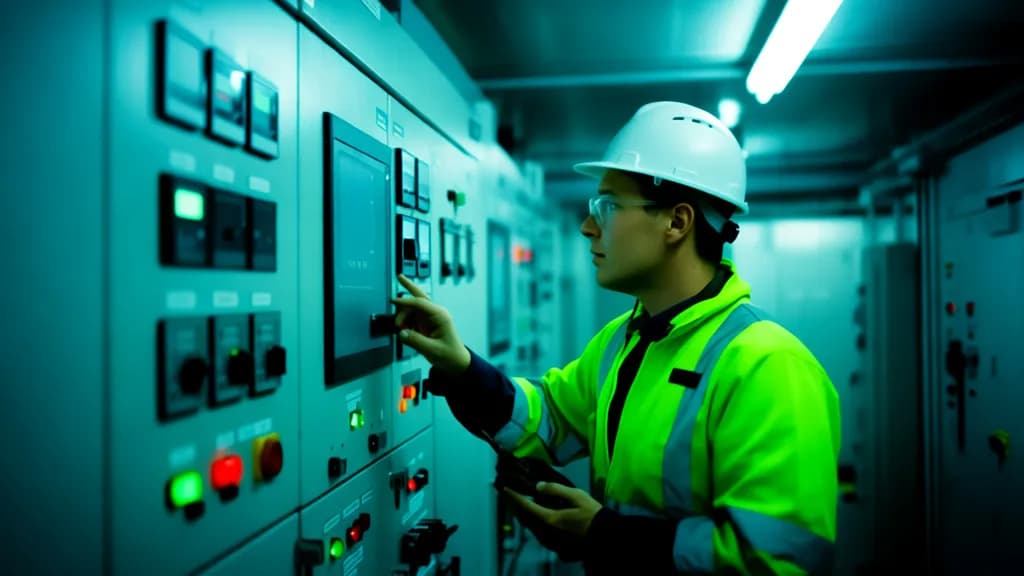
Electricians (Special Class) handle the technical end of electrical work that sits beyond general residential and commercial wiring — high-voltage systems, complex industrial controls, lift and escalator electrics, instrumentation interfaces, and specialised commissioning. The role differs from Electrician (General) because the work typically involves systems above 1000V AC or specialised commercial equipment requiring additional endorsements on top of the standard A-grade electrical licence.
Demand is heaviest in three sectors. Energy transition projects — renewables, transmission upgrades, battery storage — are the loudest signal, with Snowy 2.0, EnergyConnect, and Western Australia's transmission build-out all competing for high-voltage electricians. Mining and resources operations across the Pilbara, Bowen Basin and Goldfields pay FIFO premiums for industrial maintenance specialists. The third pillar is infrastructure — Sydney Metro, Melbourne's Suburban Rail Loop, and large data centre builds across Greater Sydney all consume Special Class capacity. Jobs and Skills Australia confirmed in its 2025 Occupation Shortage List that electricians remain in shortage in nearly every state.
ANZSCO 341112 — Code Mapping
ANZSCO 341112 covers electricians who design, assemble, install, test, commission, diagnose, maintain and repair electrical networks, systems, circuits, equipment, components, appliances and facilities for industrial, commercial and domestic purposes. The "Special Class" designation indicates work on lifts, escalators, hazardous areas, instrumentation, high-voltage systems, or other specialised installations beyond standard wiring.
The role sits inside ANZSCO Unit Group 3411 — Electricians, alongside Electrician (General) 341111. If your day-to-day work is residential and standard commercial wiring, Electrician (General) is the correct code. If you hold endorsements for high voltage, hazardous areas, lift work, instrumentation, or specialised commercial installations and the bulk of your work involves those, Electrician (Special Class) applies. Review the ANZSCO code finder before lodging.
Skills Assessment with TRA
Electrician (Special Class) is a licensed electrical occupation. Offshore applicants must complete TRA's Offshore Skills Assessment Program (OSAP). The MSA documentary-only pathway is not available for this occupation.
Offshore Skills Assessment Program (OSAP)
OSAP is a three-stage program: documentary evidence assessment, technical interview, and practical demonstration delivered by a TRA-approved Registered Training Organisation (RTO) in the applicant's country of residence or in Australia.
- Requirements: Recognised electrical trade qualification equivalent to AQF Certificate III, plus three years of post-qualification employment as an electrician working on the kind of specialised systems covered by 341112. Six years' on-the-job training accepted in place of formal qualification.
- Assessment cost: Fees vary by RTO and stage. Total OSAP costs typically range AUD $2,500-$4,500 (Section 2.1 of OSAP Applicant Guidelines, 2025).
- Processing time: 12-18 months end to end, driven by RTO availability for the practical demonstration.
- Common rejection reasons: Insufficient evidence of work on high-voltage systems, lift/escalator electrics or hazardous-area installations (the "Special Class" duties); practical demonstration scored against Australian Wiring Rules (AS/NZS 3000) where overseas training has not covered them in depth.
Post-Arrival Licensing
A successful TRA assessment is necessary but not sufficient. To work as an electrician in Australia you must hold a state-issued electrical licence. Each state and territory has its own regulator:
- NSW: NSW Fair Trading
- Victoria: Energy Safe Victoria
- Queensland: Electrical Safety Office
- Western Australia: Building and Energy
- South Australia: Consumer and Business Services
- Tasmania: Justice Department, Building Standards
- NT and ACT: WorkSafe NT / Access Canberra
Most states require a "Gap Training" course (typically 4-6 weeks) for overseas-trained electricians before issuing the licence. This is run at TAFE and recognised RTOs. Some states require an additional examination on AS/NZS 3000. Plan for this — many migrants underestimate the post-arrival licensing time.
Visa Pathways for Electricians (Special Class)
Subclass 482 — Skills in Demand Visa (Core Skills stream)
The 482 is the workhorse pathway for offshore electricians with an Australian sponsor. With Special Class salaries comfortably above the threshold, this stream is the easiest fit.
- Visa fee: AUD $3,210 (primary applicant)
- Salary threshold: Core Skills Income Threshold (CSIT) AUD $76,515 until 30 June 2026, rising to AUD $79,499 from 1 July 2026
- Processing time: Median 2-3 months for Core Skills
- Quirk: Mining and energy contractors regularly sponsor offshore Special Class electricians at salaries of AUD $130,000+, well above CSIT. The 482 is often granted in weeks for these high-value nominations.
Subclass 491 — Skilled Work Regional (Provisional)
Powerful pathway for electricians willing to commit to regional Australia. Regional infrastructure and renewables projects are concentrated outside metro areas, so the 491 aligns well with where the work actually is.
- Visa fee: AUD $4,910 (primary applicant)
- Points boost: +15 for regional nomination
- Processing time: 12-14 months
- Quirk: Tasmania, South Australia, regional NSW (Western Sydney is metro; Newcastle/Wollongong qualify as regional) and regional Queensland actively nominate electricians under their 491 streams.
Subclass 190 — Skilled Nominated
Permanent residency via state nomination. Electrician (Special Class) is consistently on multiple state lists each program year.
- Visa fee: AUD $4,910 (primary applicant)
- Points boost: +5 from state nomination
- Processing time: 8-15 months
- Quirk: Victoria and NSW typically nominate Special Class electricians with three or more years of relevant experience. Western Australia nominates strongly for industrial and mining-aligned applicants.
Subclass 189 — Skilled Independent
Permanent residency without state or employer support. The 189 is realistic for Special Class electricians because the occupation clears at lower scores than ICT.
- Visa fee: AUD $4,910 (primary applicant)
- Minimum points: 65 (trades have historically cleared at 70-80)
- Processing time: 8-15 months
- Quirk: The 2026-27 program year is expected to keep 189 active for shortage trades. Confirm invitation rounds via SkillSelect.
Subclass 186 — Employer Nomination Scheme
Permanent residency through employer sponsorship. Most Special Class electricians reach 186 via the Temporary Residence Transition stream after a 482 period.
- Visa fee: AUD $4,910 (primary applicant)
- Streams: Direct Entry (with successful TRA assessment) or Temporary Residence Transition
Subclass 494 — Skilled Employer Sponsored Regional
Useful for regional employers in mining, energy and remote infrastructure who need to sponsor offshore.
- Visa fee: AUD $4,910 (primary applicant)
- Processing time: 9-12 months
- Quirk: The 494 has a clear PR pathway via subclass 191 after three years in regional work.
Points Test Strategy
Electrician (Special Class) is a CSOL/MLTSSL occupation eligible for 189/190/491. The points framework is the standard skilled migration test.
| Points Factor | Points | Notes |
|---|---|---|
| Age (25-32) | 30 | Maximum bracket |
| Age (33-39) | 25 | Still strong |
| English (Superior — 8.0+) | 20 | Achievable but stretches for many trades applicants |
| English (Proficient — 7.0) | 10 | More common target |
| Qualification (Trade certificate/Diploma) | 10 | AQF Certificate III equivalent |
| Overseas Experience (5-7 years) | 10 | After deductions |
| Overseas Experience (8+ years) | 15 | Top experience bracket |
| Australian Experience | 5-20 | If you have local work history |
| State Nomination (190) | 5 | |
| Regional (491) | 15 | |
| Partner Skills | 5-10 | If partner has skilled occupation |
Realistic Score Scenarios
Scenario 1: Mid-Career Industrial Electrician
- Age 32 (30) + Trade qualification (10) + Proficient English (10) + 8 years overseas experience (15) = 65 points
- Add 491 nomination (+15) = 80 points — competitive across most rounds.
Scenario 2: Senior High-Voltage Specialist
- Age 38 (25) + Trade qualification (10) + Proficient English (10) + 10 years overseas experience (15) + Partner skilled (10) = 70 points
- Add 190 nomination (+5) = 75 points — workable; consider 491 instead for stronger position.
Trades clear at lower scores than ICT but the threshold has been rising. Aim for 80+ to be competitive.
State Nomination for Electricians (Special Class)
New South Wales
NSW typically nominates Electrician (Special Class) under both 190 and 491. The 491 stream targets applicants for regional NSW (Newcastle, Wollongong, regional centres). Industrial and infrastructure project work supports steady nomination volume.
Victoria
Victoria's state nomination program has consistently included Electrician (Special Class). Victoria's stream usually requires three years' recent post-qualification experience and a Victorian commitment statement. Melbourne's commercial construction pipeline drives strong demand.
Queensland
Queensland regularly nominates electricians for 190 and 491, with regional centres (Townsville, Mackay, Rockhampton, Cairns) actively recruiting for mining and resource sector roles. Brisbane Olympic infrastructure builds add commercial demand.
Western Australia
WA leads on mining-electrician nomination. The state's Graduate Occupation List and Skilled Migration Occupation List have included Electrician (Special Class) consistently. Salary levels in Pilbara mining drive most WA nominations.
South Australia
South Australia nominates for both 190 and 491, with regional 491 a strong route. Defence projects in Adelaide (Hunter-class frigates, AUKUS submarines) generate specialised electrical demand.
Tasmania
Tasmania nominates for 491 (mainly) and 190 with onshore Tasmanian connection. Hydro-electric infrastructure and rural commercial work support a steady, if smaller, program.
Salary and Employment Outlook
What Electricians (Special Class) Earn in Australia
| Role | Typical Salary Range |
|---|---|
| Special Class Electrician (1-3 years) | AUD $95,000-$115,000 |
| Industrial Maintenance Electrician | AUD $110,000-$140,000 |
| High Voltage Electrician | AUD $130,000-$180,000 |
| Lift and Escalator Electrician | AUD $115,000-$145,000 |
| Hazardous Areas Electrician | AUD $130,000-$170,000 |
| FIFO Mining Special Class | AUD $140,000-$200,000+ |
| Project / Site Lead | AUD $150,000-$200,000+ |
SEEK Salary Hub 2026 reports a national base band for industrial and special-class roles between AUD $110,000 and $145,000. Total packages typically include 11.5% superannuation, FIFO uplifts, on-call allowances and overtime.
Where the Money Is
- Mining and resources — Pilbara iron ore, Bowen Basin coal, Goldfields mining. FIFO rosters with 7/7 or 14/14 patterns.
- Energy transition — renewables (solar farms, wind, battery storage), Snowy 2.0, EnergyConnect, Marinus Link.
- Major infrastructure — Sydney Metro West, Western Sydney Airport, Melbourne Suburban Rail Loop, Cross River Rail Brisbane.
- Data centres — Sydney, Melbourne and Canberra hyperscale builds.
- Defence — Adelaide and Henderson shipyards; Williamtown air base; Northern Territory expansions.
The 2025 Occupation Shortage List from Jobs and Skills Australia confirms electricians remain in shortage nationally, with Skill Level 3 trades posting a 54.3% recruitment fill rate — the lowest of any skill band.
Tips for a Successful Application
1. Document "Special Class" Work Specifically
The single most common rejection trigger is employment references that read like a general electrician's job description. TRA assessors look for evidence of high-voltage work, hazardous-area installations, lift/escalator electrical, instrumentation, or specialised commercial systems. Ask referees to quantify hours and projects in those categories.
2. Map Your Qualification Against AS/NZS 3000
Your overseas training certificate must align with the Australian Wiring Rules. Send transcripts to TRA or an experienced migration agent for preliminary mapping. Where gaps exist (typically earthing systems and fault-loop impedance), document equivalent on-the-job training.
3. Plan for Post-Arrival Licensing
Even with a successful TRA assessment, you cannot work as an electrician in Australia without a state licence. Budget 4-12 weeks of "Gap Training" at TAFE after arrival and confirm the licensing pathway with your destination state's regulator before relocating.
4. Target Regional 491 If You Have a Job Offer Outside Metro
Regional Australia is where Special Class work is concentrated — mining, energy, regional infrastructure. The 491 visa adds 15 points and routes you directly to the projects that are hiring. Tasmania, regional WA and regional SA have historically nominated trades faster than metro states.
5. Use Employer Sponsorship if Your Points Are Below 80
The 482 Skills in Demand visa does not require a points test, only a TRA assessment and a qualifying job offer above CSIT. With Special Class salaries comfortably above the threshold, sponsorship is often the faster route — particularly for FIFO mining and energy transition employers who recruit internationally as a default.
Step-by-Step Migration Roadmap
- Confirm ANZSCO 341112 fits your duties — review the ANZSCO code finder and discount Electrician (General).
- Gather employment references documenting specialised electrical work (HV, hazardous areas, lifts, instrumentation).
- Sit IELTS or PTE — Competent English minimum (IELTS 6.0); higher earns points later.
- Lodge TRA OSAP application through your country's approved RTO.
- Complete documentary evidence stage — qualification certificates, employment evidence, pay records.
- Attend technical interview and practical demonstration through the RTO.
- Receive successful TRA outcome — valid three years for migration.
- Submit EOI in SkillSelect for 189, 190 or 491.
- Apply for state nomination if pursuing 190 or 491.
- Receive invitation and lodge visa within 60 days via ImmiAccount.
- Complete health and character checks including AFP police check and HAP-ID medical.
- After grant, complete state Gap Training and licensing before commencing work in Australia.
Frequently Asked Questions
What is the difference between Electrician (General) 341111 and Electrician (Special Class) 341112?
Electrician (General) covers standard residential and commercial wiring — power, lighting, switchboard work, fault-finding. Electrician (Special Class) covers specialised work beyond general installations, including high voltage, hazardous areas, lifts and escalators, instrumentation, and complex commercial systems. The two codes share the same Skill Level (3) and are both on the MLTSSL. Choose the code that matches the majority of your actual duties — claiming Special Class without supporting evidence is a common failure mode.
Can I work in Australia immediately after my visa is granted?
No. TRA assessment confirms your skills for migration purposes; it does not grant a licence to work as an electrician. Each Australian state requires a separate electrical licence, which usually involves a Gap Training course (4-6 weeks) and may require an exam on AS/NZS 3000. Plan to spend the first 4-12 weeks after arrival completing licensing before starting paid work.
Why is OSAP mandatory for Electrician (Special Class)?
Electrical work is licensed and safety-critical in Australia. TRA cannot verify offshore electrical qualifications through document review alone, so a practical demonstration through an approved RTO is mandatory. The MSA documentary-only pathway is not open for this occupation regardless of country of citizenship.
Is Electrician (Special Class) on the MLTSSL in 2026?
Yes. ANZSCO 341112 remains on the Medium and Long-Term Strategic Skills List in 2026, keeping subclass 189 access open. It also appears on the Core Skills Occupation List used by the 482 visa, and on most state nomination lists.
What is the demand outlook for electricians in Australia through 2030?
Very strong. The Electrical Trades Union has called the shortfall "unprecedented", and PSO's 2024 Workforce Plan projects a national shortage exceeding 14,000 electricians by 2030 and approaching 34,000 by 2050. Jobs and Skills Australia's 2025 Occupation Shortage List confirms electricians remain in shortage in nearly every state. Energy transition projects, mining, defence and major infrastructure all compete for the same pool.
Can my partner's points contribute to my application?
Yes. If your partner holds a skilled occupation on the relevant list, has Competent English and has a positive skills assessment, you can claim 10 points for partner skills. If they have Competent English alone, you can claim 5 points. Confirm partner status under the SkillSelect framework before lodging your EOI.