Australian Visa for Indian Citizens: Complete 2026 Guide
India is Australia's largest source country for migration, with hundreds of thousands of Indians applying for Australian visas each year. Whether you're planning a holiday, pursuing higher education, or looking at permanent residency through skilled migration, this guide covers every visa pathway available to Indian passport holders — including specific documentation requirements like PCC and health examinations that apply to Indian applicants.
Quick Facts: Australian Visas for Indian Citizens
| Detail | Information |
|---|---|
| Tourist Visa | Subclass 600 (Visitor) — online application |
| Student Visa | Subclass 500 — Genuine Student requirement applies |
| Working Holiday | Subclass 462 (Work and Holiday) — limited annual cap, added under the 2024 programme expansion |
| Skilled Migration | Subclass 189, 190, 491 — points-tested |
| Employer Sponsored | Subclass 482 (TSS), 494, 186 |
| Partner Visa | Subclass 309/100 (offshore) or 820/801 (onshore) |
| Health Exam Required | Yes — chest X-ray and medical through Bupa panel physician |
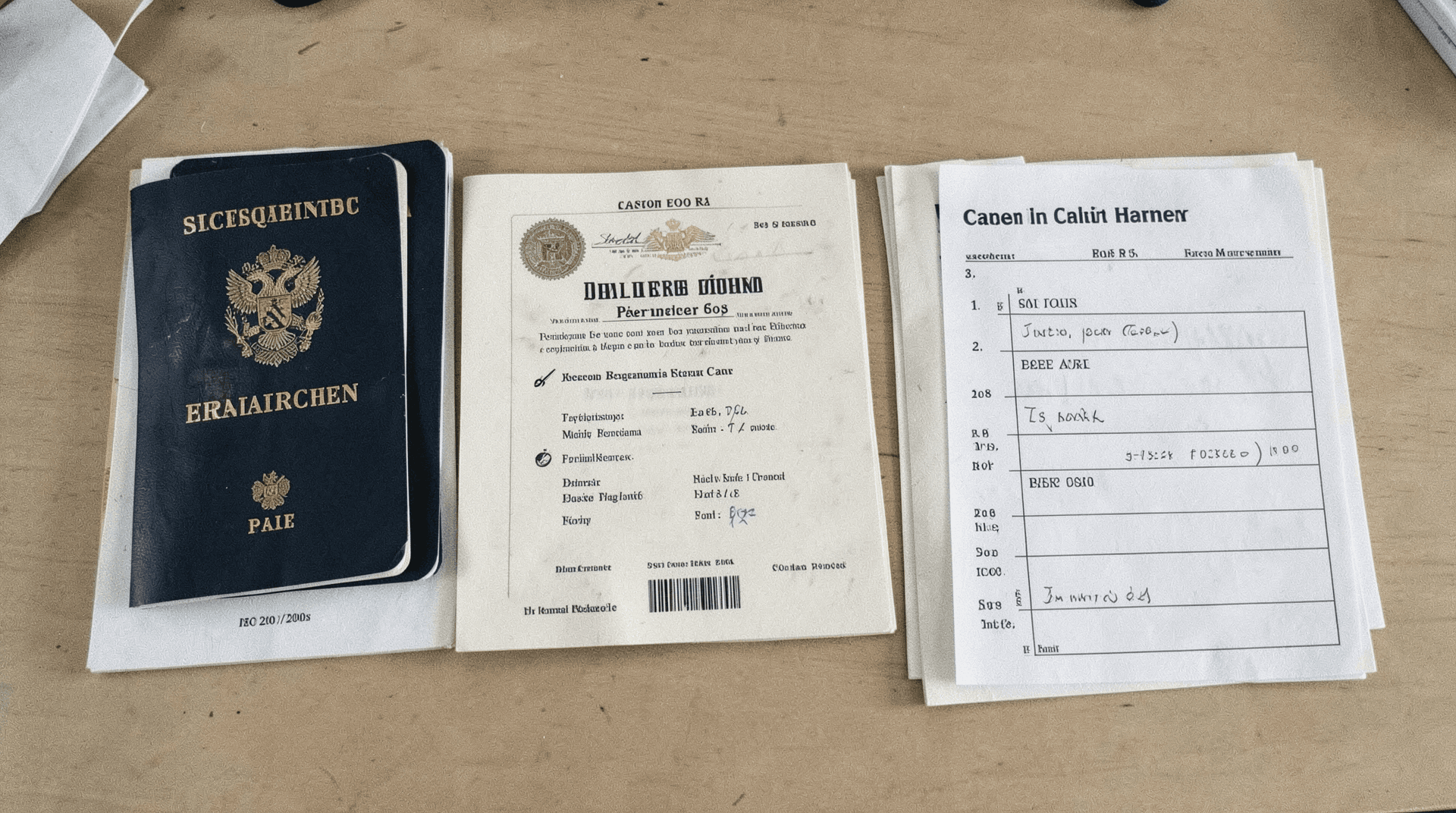
| Police Clearance | PCC from Passport Seva Kendra or RPO |
| Embassy | Australian High Commission, New Delhi |
Tourist Visa (Subclass 600) for Indian Citizens
The Visitor visa (subclass 600) is the standard pathway for Indian nationals wanting to visit Australia for tourism, family visits, or business purposes. Unlike citizens of countries eligible for the ETA or eVisitor system, Indians must submit a full visa application.
Requirements for Indian Applicants
You'll need to provide:
- A valid Indian passport with at least six months validity beyond your planned stay
- Completed application through ImmiAccount or via a visa application centre (VFS Global operates centres across India)
- Evidence of financial capacity — bank statements covering the last three months showing sufficient funds
- Travel itinerary or flight bookings
- Health insurance for the duration of your stay
- If visiting family, an invitation letter and proof of your host's status in Australia
- Employment letter or business registration (to demonstrate ties to India)
Cost and Processing
The base application charge for a tourist visa is AUD $430. Processing times typically sit around 18-30 days for Indian applicants, though peak season (October to February) can push this longer. Applications lodged through VFS Global centres in Mumbai, Chennai, Kolkata, Hyderabad, Bangalore, Ahmedabad, Jalandhar, or New Delhi incur an additional service fee.
One thing worth noting: refusal rates for Indian tourist visa applications are higher than the global average. The most common reason? Insufficient evidence of ties to India or inadequate financial documentation. Don't cut corners on these.
Student Visa (Subclass 500) for Indian Citizens
India consistently ranks as one of the top source countries for international students in Australia. The student visa pathway has changed significantly with the introduction of the Genuine Student (GS) requirement, replacing the old Genuine Temporary Entrant test.
Genuine Student Requirement
This is where many Indian applicants stumble. The GS requirement asks you to demonstrate that you're a genuine student — not someone using a student visa primarily for work or migration purposes. Your written statement needs to address:
- Why you chose this specific course and institution
- How the qualification fits your career plans back home (or globally)
- Your understanding of the living costs in Australia
- Your immigration history and current circumstances
The Department looks at your academic background, gaps in study, the relevance of the course to your previous qualifications, and the economic conditions in your home country. For Indian applicants, courses at non-university providers in metropolitan areas receive extra scrutiny.
Financial Requirements
You must demonstrate access to approximately AUD $29,710 per year for living costs, plus tuition fees, plus travel costs. For Indian students, this means showing either:
- Funds in your own or a family member's bank account (held for at least three months)
- A loan sanction letter from a recognised financial institution
- A scholarship covering your costs
Cost and Timeline
The student visa application costs AUD $710. Processing for Indian applicants runs between 4-12 weeks, depending on your institution's risk rating and the completeness of your application. Applying with a CoE from a university in a regional area generally results in faster processing.
Skilled Migration Pathways for Indian Citizens
This is where things get really interesting for Indian applicants. The skilled migration program is the primary pathway to Australian permanent residency, and Indian nationals represent the largest cohort of skilled migrants.
Subclass 189 — Skilled Independent Visa
The 189 is the most competitive pathway. You need:
- An occupation on the Medium and Long-term Strategic Skills List (MLTSSL)
- A positive skills assessment from the relevant assessing authority (ACS for IT professionals, Engineers Australia for engineers, VETASSESS for many other occupations)
- At least 65 points on the points test (realistically, you need 70-90+ depending on your occupation)
- An invitation through SkillSelect after submitting an Expression of Interest
- Competent English (IELTS 6.0 each band minimum, though higher scores earn more points)
For Indian IT professionals — who make up a substantial portion of 189 applicants — current invitation rounds have been competitive. Software engineers and ICT business analysts typically need 80+ points for an invitation.
Subclass 190 — State Nominated
State nomination adds 5 points to your score and each state has its own occupation list and criteria. New South Wales, Victoria, and Queensland are popular choices, but don't overlook states like South Australia and Tasmania that may have more accessible nomination criteria for your occupation.
Subclass 491 — Skilled Work Regional
The regional pathway adds 15 points and requires you to live and work in a designated regional area for at least three years. After that period, you can apply for the subclass 191 permanent visa. This has become an increasingly popular route for Indian applicants who might not reach the points threshold for a 189.
Employer Sponsored Visas for Indian Citizens
Subclass 482 — Temporary Skill Shortage (TSS)
If you have an Australian employer willing to sponsor you, the TSS visa lets you work in Australia for up to four years. The employer must demonstrate they've tested the labour market and couldn't find a suitable Australian worker. Your occupation must be on the relevant skilled occupation list, and you'll need a skills assessment in most cases.
The short-term stream allows stays of up to two years (with a possible two-year renewal), while the medium-term stream allows up to four years and can lead to permanent residency through the subclass 186.
Subclass 186 — Employer Nomination Scheme
This is the permanent residency pathway through employer sponsorship. The Temporary Residence Transition stream is the most common route — you work for your employer on a 482 visa for at least two years, then transition to PR. The Direct Entry stream is also available if you have three years of relevant work experience and a skills assessment.
Indian-Specific Documentation Requirements
Police Clearance Certificate (PCC)
Indian applicants need a Police Clearance Certificate issued by the Passport Seva Kendra or Regional Passport Office. You cannot get this through local police stations — it must come through the passport office system. Processing takes about 2-3 weeks, and you'll need to apply through the Passport Seva portal.
If you've lived in other countries for 12 months or more since turning 16, you'll also need police clearances from those countries.
Health Examination
All Indian applicants for visas longer than three months must undergo a health examination with a Bupa-approved panel physician. In India, panel clinics operate in major cities including Delhi, Mumbai, Chennai, Bangalore, Hyderabad, Kolkata, and Ahmedabad.
The examination includes:
- A chest X-ray (tuberculosis screening — mandatory for all Indian applicants)
- General medical examination
- Blood tests (for applicants over 15 planning to stay more than 12 months)
- HIV testing (for applicants over 15)
- Hepatitis B and C testing (in some cases)
You'll receive a HAP ID through ImmiAccount, which you take to the panel clinic. Results are transmitted directly to the Department — you don't need to submit them yourself.
Additional Requirements
- English language test results: Required for skilled and student visas. IELTS and PTE Academic are the most commonly used tests in India. PTE has gained popularity due to faster results.
- Educational credential verification: Indian qualifications may need to be verified through the relevant assessing authority. For IT professionals, ACS requires detailed employment references on company letterhead.
- Financial documents: Bank statements, tax returns (ITR), and property valuations may be requested as evidence of financial capacity.
Partner and Family Visas
Indian nationals are among the top applicants for Australian partner visas. The process involves demonstrating a genuine and continuing relationship through:
- Joint financial evidence (bank accounts, leases, bills)
- Social recognition of the relationship
- Commitment to each other
- The nature of the household you share
For Indian applicants, marriages arranged by families are recognised, but you still need to demonstrate the relationship has developed into a genuine partnership. Cultural factors are considered, but the evidence requirements remain the same.
The offshore partner visa (subclass 309/100) costs AUD $9,095 and processing times currently sit at 12-22 months for the temporary stage.
Frequently Asked Questions
Can Indian citizens get an ETA or eVisitor for Australia?
No. Indian passport holders are not eligible for the ETA (subclass 601) or eVisitor (subclass 651). You must apply for the full Visitor visa (subclass 600), which requires more documentation and has a longer processing time.
How long does an Australian tourist visa take for Indians?
Processing times vary, but most applications are decided within 18-30 days. Complex cases or applications during peak season can take up to 60 days. Applying well in advance of your travel dates is strongly recommended.
What is the minimum points score for skilled migration from India?
The minimum is technically 65 points, but practically, most Indian applicants need 70-90+ points depending on their occupation. IT professionals and accountants tend to face the highest competition and need scores at the upper end of this range.
Do I need IELTS for an Australian tourist visa?
No. English language tests are not required for tourist or visitor visas. They are required for student visas (minimum IELTS 5.5 overall, or equivalent) and skilled migration visas (minimum IELTS 6.0 each band for competent English).
Can I work in Australia on a tourist visa?
No. The standard tourist visa (subclass 600) does not include work rights. If you want to work in Australia, you need a visa with work permission, such as a student visa (limited to 48 hours per fortnight during study periods), a skilled visa, or an employer-sponsored visa.
How much bank balance do I need for an Australian tourist visa from India?
There's no fixed amount, but as a general guide, you should show at least AUD $5,000-$10,000 for a short trip, or more for longer stays. The key is demonstrating that you can cover your expenses without working in Australia and that you have financial ties to India.