Dental Hygienist Visa Pathway to Australia: Complete 2026 Guide
Updated: 13 May 2026
Australia classifies Dental Hygienists under ANZSCO 411211 at Skill Level 1. VETASSESS conducts the skills assessment, the Australian Dental Council (ADC) handles qualification verification for AHPRA registration, and the Dental Board of Australia issues practice registration. The occupation sits on the CSOL and Regional Occupation List (ROL), unlocking subclasses 491, 494, 482 and 186. Typical 2026 salaries range AUD $85,000-$130,000.
Quick Facts: Dental Hygienist Migration Pathway
| Detail | Information |
|---|---|
| ANZSCO Code | 411211 (Dental Hygienist) |
| Skill Level | 1 (Bachelor degree or higher) |
| Skills Assessment | VETASSESS (Vocational Education and Training Assessment Services) |
| Professional Registration | Australian Dental Council (ADC) assessment then AHPRA / Dental Board of Australia |
| Occupation List | CSOL and ROL — regional and employer-sponsored pathways |
| Visa Options | 491, 494, 482, 186 |
| Demand Level | High — oral health workforce shortages, especially regional |
| Salary Range | AUD $85,000-$130,000 (SEEK / ERI SalaryExpert 2026) |
| Typical 189 Score | N/A — not on MLTSSL |
| Key Challenge | Triple-track: VETASSESS plus ADC assessment plus AHPRA registration |
Role Context in Australia
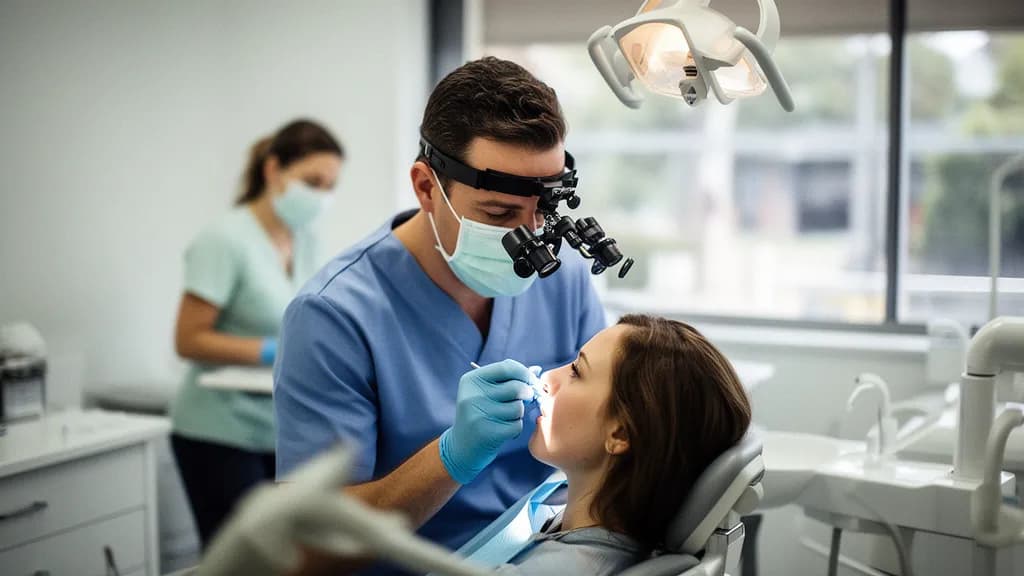
Dental hygienists in Australia work alongside dentists and oral health therapists in general dental practices, periodontal specialist practices, public dental services, and increasingly in direct-access models permitted under the National Law. The role focuses on preventive care: scaling and root planing, oral health education, fluoride application, fissure sealants, dietary advice and periodontal monitoring.
Demand sits in the suburban and regional general-practice market. Capital-city CBDs have strong hygienist density already, but outer suburbs and regional towns face workforce gaps that drive the regional-visa orientation of this occupation. NSW South Coast, regional Victoria, North Queensland, the Wheatbelt in WA, and most of Tasmania run shortages.
Australia's hygienist scope is wider than in many overseas jurisdictions. Once registered, hygienists can perform local anaesthesia (within scope determined by their training), provisional restorations in some contexts, and direct-access care under structured frameworks. Compared to the US, the UK and Ireland, Australian hygienists hold a comparatively high level of clinical autonomy.
ANZSCO 411211: What the Code Covers
ANZSCO 411211 covers dental hygienists who provide preventive dental care and education to patients under the supervision of a Dentist. The official task list emphasises plaque and calculus removal, oral health education, fluoride and sealant application, and recording dental conditions.
Common day-to-day duties matching this code:
- Performing scaling, root planing and prophylaxis
- Assessing periodontal status and recording pocket charts
- Applying topical fluoride and pit-and-fissure sealants
- Educating patients on oral hygiene and dietary impact
- Taking dental radiographs within state-permitted scope
- Working as part of a recall and maintenance program for periodontal patients
If your training is broader — including therapy procedures such as fillings and primary tooth extractions for children — ANZSCO 411214 Dental Therapist or 411216 Oral Health Therapist may be the correct code. Read both ANZSCO unit-group descriptions before nominating via the ANZSCO code finder.
Skills Assessment with VETASSESS
VETASSESS classifies Dental Hygienist as a Group A professional occupation. The minimum bar is an AQF Bachelor degree or higher in a highly relevant field, plus at least one year of post-qualification highly relevant employment in the last five years.
Requirements:
- Qualification at Australian Bachelor level or higher in Dental Hygiene, Dental Hygiene Therapy or Oral Health Therapy
- One year minimum post-qualification employment at Skill Level 1 within the last five years
- Employment letters describing scope of practice, supervision arrangements and patient volumes
- English at Competent level minimum
Assessment cost: AUD $1,076 (standard full skills assessment, effective from 22 October 2025) Processing time: 12-20 weeks from full lodgement Common rejection reasons: Diploma-level qualifications without bachelor-equivalent assessment; employment letters that focus on dental nursing or assisting duties rather than independent hygiene practice; missing radiography or local anaesthesia evidence.
Apply through the VETASSESS portal. Pre-assessment advice is worth the modest fee where qualifications are at diploma plus advanced certificate level rather than a single bachelor award.
ADC Assessment and AHPRA Registration
A positive VETASSESS skills assessment supports your visa application but does not authorise practice. The Dental Board of Australia, through AHPRA, registers all dental practitioners — including hygienists, therapists and oral health therapists — and uses the ADC to assess the qualifications of overseas-trained practitioners.
The ADC pathway for dental hygienists, therapists and oral health therapists:
- Initial assessment — desktop review of qualifications, professional registration and clinical experience
- Practical examination — clinical assessment conducted at an approved test centre
- Registration with AHPRA — once both stages are complete
ADC fees: Refer directly to the ADC fees page — separate charges apply for initial assessment and practical examination.
Trans-Tasman Mutual Recognition: Hygienists and therapists registered to practise in New Zealand can apply for general registration with AHPRA via the Trans-Tasman process. This pathway bypasses the ADC examination route.
Timeline: Initial assessment plus practical examination typically takes 6-12 months end-to-end, longer if examination sittings are oversubscribed. Plan to run VETASSESS, ADC and visa preparation in parallel rather than sequentially.
Visa Pathways for Dental Hygienists
Dental Hygienist sits on the CSOL and ROL — there is no MLTSSL listing, so the 189 and most metropolitan 190 streams are closed. The pathways below are ordered by realistic likelihood.
Subclass 491 — Skilled Work Regional (Provisional)
Five-year provisional regional visa with a pathway to permanent residence via subclass 191. The dominant route for international hygienists.
- Visa fee: AUD $4,910 (primary applicant)
- Points threshold: 65 minimum; +15 from regional state or family nomination
- Processing time: 50% of cases finalised within 6-20 months in 2026
- Quirk: Regional dental groups offer the strongest sponsorship support. Look at Pacific Smiles, 1300SMILES regional sites, and state public dental services in regional centres.
Subclass 494 — Skilled Employer Sponsored Regional (Provisional)
Five-year provisional employer-sponsored regional visa. Used where a specific regional employer wants the candidate.
- Visa fee: AUD $4,910
- Salary threshold: Core Skills Income Threshold (AUD $76,515)
- Processing time: Comparable to other employer-sponsored regional streams
- Quirk: Requires Regional Certifying Body endorsement in addition to standard nomination steps.
Subclass 482 — Skills in Demand (Core Skills Stream)
Employer-sponsored temporary visa, valid up to four years. Suitable for hygienists with a metropolitan or regional employer sponsor.
- Visa fee: AUD $3,210 (primary applicant)
- Salary threshold: Core Skills Income Threshold (AUD $76,515)
- Processing time: Median 51 days for Core Skills stream in 2026
- Quirk: Larger dental groups handle sponsorship efficiently because they sponsor in volume. Solo and small practices can sponsor but the administrative load deters many.
Subclass 186 — Employer Nomination Scheme
Permanent residence through employer sponsorship.
- Visa fee: AUD $4,910
- Streams: Direct Entry (requires positive VETASSESS plus 3 years experience) or Transition (after 2+ years on 482)
- Processing time: Median 4-9 months for Direct Entry
- Quirk: The Transition stream is the standard sequence — start on 482, transition to 186 once eligibility ticks over.
State Nomination for Dental Hygienists
Because the occupation is regional-leaning, nomination is concentrated in states with strong regional dental workforce gaps.
New South Wales
NSW's 491 regional stream covers dental hygienist nominations under the Care Economy priority umbrella. Regional NSW — the Mid North Coast, the Riverina, New England and the Far West — runs the deepest workforce gaps and offers the best nomination odds.
Victoria
Victorian regional health districts include dental services in Bendigo, Ballarat, Geelong and Mildura. The state's 491 stream gives priority to healthcare roles, with hygienists supported through the Live in Melbourne Registration of Interest system.
Queensland
Queensland's regional dental workforce gaps stretch from Cairns and Townsville down through Mackay, Rockhampton, Toowoomba and the Wide Bay region. The state's 491 stream covers dental hygienist nominations against the regional list.
Tasmania
Tasmania has long-running dental workforce shortages, particularly outside Hobart. The state generally welcomes overseas-trained hygienists with a job offer or recent local employment.
South Australia
SA made all skilled occupations eligible for its 2025-26 program. Hygienist nominations are most viable for applicants already employed in SA or recent graduates of SA programs. Country Health SA's dental services run shortages in regional centres.
Western Australia
Regional WA — the South West, Goldfields, Mid West and Pilbara — has acute hygienist shortages. Sponsorship support through regional dental groups is the standard route.
Salary and Employment Outlook
What Can You Expect to Earn?
| Role | Typical Salary Range |
|---|---|
| Early-career Dental Hygienist (1-3 yrs) | AUD $80,000-$95,000 |
| Experienced Dental Hygienist | AUD $95,000-$120,000 |
| Senior / Lead Hygienist | AUD $115,000-$140,000+ |
| Hourly rate (private) | AUD $55-$80 per hour |
| Public dental hygienist (state award) | AUD $80,000-$110,000 base |
Source: SEEK Career Advice 2026 and ERI SalaryExpert. Indeed reports an average of AUD $100,032; ERI SalaryExpert reports an average of AUD $118,279 in 2026. Total package adds 11.5% superannuation; many private clinics offer commission on production above a base hourly rate.
Highest-Paying Sectors
- Periodontal specialist practices — concentrated hygiene work at higher per-session fees
- Cosmetic and high-end general practices — premium suburb practices with strong recall books
- Regional general practices — relocation and accommodation incentives lift effective income
- State public dental services — guaranteed hours, leave loading, defined progression
- Mobile and aged-care dental services — niche segments with strong demand
Geographic Notes
Sydney's Eastern Suburbs and Inner West, Melbourne's south-east, and Brisbane's western suburbs offer the highest premium private hourly rates. Regional locations pay lower base rates but include sign-on bonuses, accommodation support and a faster path to permanent residence via 491 and 191.
Tips for a Successful Application
1. Plan the triple-track timeline from day one
VETASSESS, ADC assessment and visa preparation can run in parallel. If you sequence them, you add 9-12 months. Map the timeline before you start so each milestone feeds the next.
2. Document your full scope of practice
ADC and VETASSESS both expect detailed evidence of independent practice — periodontal scope, anaesthetic administration where applicable, radiography. Generic "performed hygiene duties" letters will weaken the file. Ask employers for scope-specific references.
3. Sit the OET rather than IELTS
The Occupational English Test has a dental practitioner version that aligns better with clinical English than general IELTS. AHPRA accepts OET for dental practitioners; many candidates score higher on OET because the scenarios match their daily work.
4. Target regional employers first
The visa list assignment makes regional 491 and 494 the most accessible pathways. Regional dental groups are more aggressive recruiters of overseas-trained hygienists and often pre-organise sponsorship and accommodation.
5. Confirm your ADC pathway before booking exam slots
Practical exam sittings are oversubscribed. Confirm your initial assessment outcome before booking travel for the practical exam. Trans-Tasman applicants moving via New Zealand registration should plan that route explicitly.
Step-by-Step Migration Roadmap
- Confirm ANZSCO fit — 411211 versus 411214 versus 411216 — via the ANZSCO code finder
- Gather qualification documents — transcripts, registration, clinical scope letters
- Lodge VETASSESS — full skills assessment ($1,076)
- Apply for ADC initial assessment — desktop review of qualifications
- Sit OET or IELTS — at Proficient level minimum
- Book ADC practical examination — once initial assessment is positive
- Identify your state and regional area — match employer location to 491/494 nomination criteria
- Submit EOI in SkillSelect with state preference
- Apply for state nomination or secure 482 employer sponsorship
- Complete AHPRA registration with the Dental Board of Australia
- Lodge the visa — supply medicals, AFP and overseas police checks
- Relocate to nominated region and commence employment
For broader context see the most-in-demand occupations list, the skills assessment bodies hub and the CSOL hub.
Frequently Asked Questions
Can I work as a dental hygienist in Australia without AHPRA registration?
No. Dental Hygienist is a registered title under the National Law. You must hold current AHPRA registration to practise. The standard route for overseas-trained hygienists is ADC initial assessment followed by ADC practical examination, then registration with the Dental Board of Australia.
Is dental hygienist on the MLTSSL?
No. The occupation sits on the CSOL and ROL only. That rules out subclass 189 and most metropolitan 190 streams, leaving subclasses 491, 494, 482 and 186 as the realistic pathways. Plan for a regional or employer-sponsored route from the start.
How is dental hygienist different from oral health therapist?
A Dental Hygienist focuses on preventive care — scaling, periodontal maintenance, oral health education. An Oral Health Therapist combines hygiene with therapy duties (fillings, primary tooth extractions for children). Australia's Bachelor of Oral Health programs train graduates in both scopes. Match your training and current scope of practice to the right ANZSCO code rather than picking the one with the easier visa pathway.
Will my UK or Irish dental hygiene qualification be recognised?
UK GDC-registered hygienists and Irish Dental Council-registered hygienists generally have strong evidence bases for both VETASSESS and ADC. The ADC practical examination is still required unless the Trans-Tasman pathway via New Zealand registration applies.
How does the practical examination work?
The ADC practical examination is a clinical assessment conducted at an approved Australian test centre. Candidates demonstrate periodontal assessment, instrumentation, scaling techniques and patient communication. Plan to travel for the examination and account for sitting availability — slots are limited and oversubscribed in 2026.
What does the total package look like for a regional hygienist?
A regional hygienist base of AUD $95,000 with a private practice often comes with sign-on bonus, accommodation support and commission on production above a base book. Total package commonly reaches AUD $115,000-$130,000 including 11.5% superannuation. Public dental hygienist roles in regional state services pay slightly lower base but offer leave loading, defined progression and stable hours.